
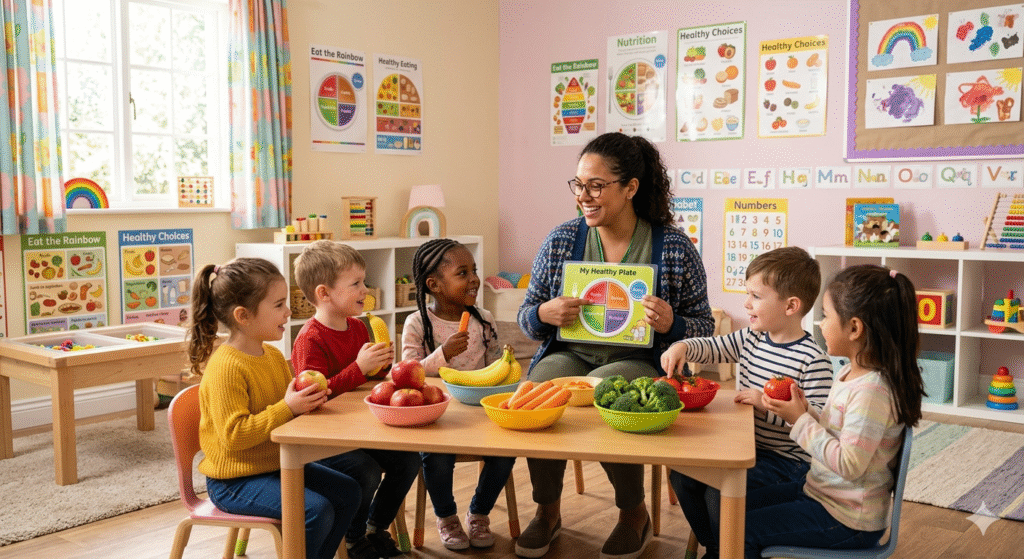
How Can a Childcare Practitioner Support Healthy Eating
Healthy eating plays a vital role in a child’s growth, development, and overall wellbeing. During the early years, children develop food preferences and habits that can influence their health for the rest of their lives. This is why childcare practitioners have an important responsibility in promoting healthy eating within childcare settings.
By creating a supportive environment and encouraging good nutrition habits, childcare professionals can help children develop a positive relationship with food.
In this guide, we explore how childcare practitioners can support healthy eating and build strong nutritional habits for children.
1. Providing Balanced and Nutritious Meals
One of the most important ways childcare practitioners can support healthy eating is by offering balanced and nutritious meals and snacks.
Children need a variety of foods to support healthy development. A well-balanced diet should include:
- Fruits and vegetables
- Whole grains
- Dairy or dairy alternatives
- Protein sources such as beans, eggs, or lean meat
Providing a mix of these food groups helps ensure children receive the vitamins and nutrients they need for healthy growth.
2. Creating a Positive Mealtime Environment
The environment during meals can strongly influence children’s eating habits. Childcare practitioners should aim to create a relaxed and positive atmosphere during mealtimes.
This includes:
- Sitting with children during meals
- Encouraging conversation
- Avoiding pressure or punishment related to food
When children feel comfortable, they are more likely to try new foods and develop healthier eating habits.
3. Encouraging Children to Try New Foods
Children can sometimes be hesitant to try unfamiliar foods. Childcare practitioners can support healthy eating by gently encouraging children to explore new foods without forcing them.
Helpful strategies include:
- Offering small portions of new foods
- Presenting food in colorful and appealing ways
- Reintroducing foods multiple times
Research shows that repeated exposure can help children gradually accept new tastes and textures.
4. Being a Positive Role Model
Children often learn by observing the behavior of adults around them. Childcare practitioners can influence healthy habits by demonstrating positive attitudes toward healthy foods.
For example:
- Eating healthy foods with children
- Showing enthusiasm for fruits and vegetables
- Talking about the benefits of healthy foods
When practitioners model healthy eating behaviors, children are more likely to adopt similar habits.
5. Teaching Children About Nutrition
Early education about food and nutrition can help children make healthier choices as they grow older.
Childcare practitioners can introduce simple learning activities such as:
- Talking about different food groups
- Explaining where food comes from
- Involving children in food preparation activities
These experiences help children build curiosity and understanding about healthy eating.
6. Working With Parents and Families
Healthy eating habits are most effective when they are supported both in childcare settings and at home. Childcare practitioners can collaborate with parents by sharing information about children’s eating habits and offering guidance on nutrition.
This partnership helps create consistency and encourages healthy routines for children.
Final Thoughts
Childcare practitioners play a key role in shaping children’s attitudes toward food and nutrition. By providing balanced meals, encouraging positive eating habits, and educating children about healthy foods, practitioners can support lifelong healthy eating behaviors.
A supportive childcare environment not only promotes good nutrition but also helps children develop confidence and independence around food choices.